Amazon's Frequently Bought Together section is a product recommendation widget that appears on Amazon product detail pages, showing 2–3 items that other shoppers commonly purchase alongside the product you are viewing. Powered by item-to-item collaborative filtering and market basket analysis, it analyzes millions of purchase histories to surface relevant bundles. The feature is fully algorithm-driven and cannot be directly controlled by sellers, but it can be strategically influenced through product pairing, targeted PPC ads, and virtual bundles.
Understanding the Engine: How the Amazon Frequently Bought Together Algorithm Works
At its core, the amazon frequently bought together feature is powered by a sophisticated recommendation engine that relies on a principle called item-to-item collaborative filtering. Unlike older systems that tried to match you with similar shoppers, Amazon's algorithm focuses on the relationships between products themselves. The logic is simple yet powerful: if a large number of customers buy a coffee maker and a specific brand of coffee filters together, the system assumes you might want to do the same.
This process is a classic example of Market Basket Analysis, a data mining technique used to discover co-occurrence relationships between items. Think of it as a digital store manager observing thousands of shopping carts every second to identify patterns. When the algorithm detects a strong, recurring connection between two or more products, it presents them as a convenient bundle.
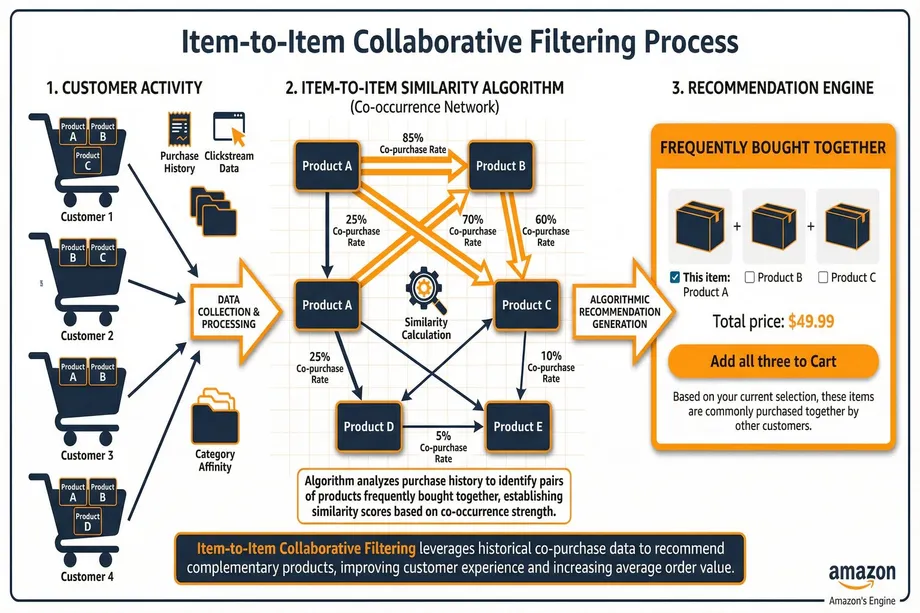
The algorithm considers several key factors:
- Purchase History: The most crucial factor is the sheer volume of completed transactions. When enough people buy items together, the connection is solidified.
- Clickstream Data: The algorithm doesn't just wait for a purchase. It also analyzes browsing behavior, such as which products are viewed, compared, or added to the cart in the same session.
- Category Affinity: Certain product categories have natural synergies (e.g., a new phone and a phone case). The algorithm leverages these logical pairings to make intuitive suggestions.
- Pricing and Fulfillment: The system favors bundles that offer a seamless purchasing experience. Products with a combined price that hits a psychological sweet spot and are fulfilled by Amazon (FBA) for consistent delivery times are more likely to be featured.
For Shoppers: How to Find Genuine Deals in the Amazon Frequently Bought Together Section
While the amazon frequently bought together section is a goldmine for convenience, it can also be a source of significant savings if you know how to look. Not every bundle is a true discount, but with a strategic approach, you can uncover real deals.
1. Verify the Discount
Don't assume a bundle is automatically cheaper. Before clicking "Add all three to Cart," do a quick price check. Add each item to your cart or a wishlist individually and compare the total to the bundle price. While Amazon sometimes applies a small, unadvertised discount for buying the bundle, this isn't always the case.
2. Look for Complementary Promotions
The real power comes from stacking discounts. Look for coupons, "Subscribe & Save" options, or other promotions on the individual product pages. Sometimes, applying these discounts individually and then buying the items together can result in a lower price than the advertised bundle.
3. Assess Your Actual Needs
The algorithm is designed to increase your cart size. It's easy to be tempted by a seemingly good deal on a product you don't actually need. Before you buy, ask yourself if you would have purchased the additional items anyway. The best deals are on products you were already planning to buy.
For Sellers: Strategies to Get Your Products Featured in the Amazon Frequently Bought Together Section
For Amazon sellers, securing a spot in the amazon frequently bought together module is like getting free, high-converting advertising. While you can't directly control this feature, you can strategically influence the algorithm to favor your products.
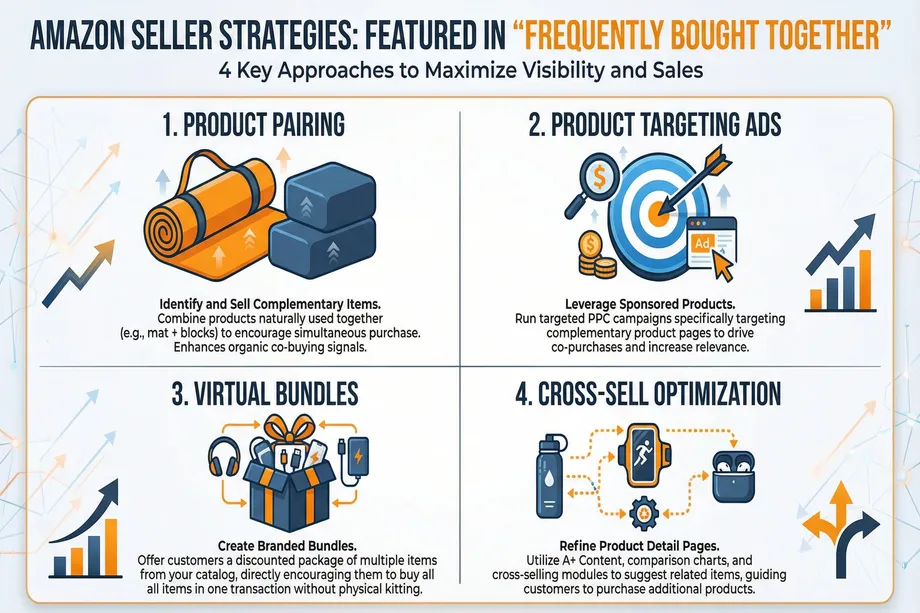
1. Master the Art of Product Pairing
Identify logical product pairings within your own catalog. If you sell a primary product, create a low-cost, high-value accessory that naturally complements it. For example, if you sell a high-quality yoga mat, offer a set of yoga blocks or a carrying strap. This creates a powerful internal synergy that the algorithm can easily pick up on.
2. Leverage Product Targeting Ads
One of the most effective ways to create purchase history is to run targeted PPC campaigns. Use Amazon's Product Targeting feature to advertise your complementary product on the detail page of your primary product (and vice-versa). This encourages customers to add both items to their cart in the same session, sending a strong signal to the algorithm.
3. Create Virtual Product Bundles
Use Amazon's "Virtual Product Bundles" feature to create a single, discounted listing for two or more of your products. This not only makes it easier for customers to buy your products together but also directly feeds the algorithm with the purchase data it needs to create an amazon frequently bought together recommendation.
4. Optimize Your Listings for Cross-Selling
Don't just sell a product; sell a solution. Use your product images and bullet points to showcase how your products work together. For example, a lifestyle image could feature your main product being used with its perfect accessory. In your description, explicitly mention the complementary product and the enhanced experience it provides.
Data-Driven Decisions: How to Scrape Amazon Frequently Bought Together Data with Easyparser
To truly master the amazon frequently bought together feature, you need data. Understanding which products are being bundled with your own (and your competitors') is invaluable for market research, competitive analysis, and strategy development. This is where a powerful data extraction tool like Easyparser becomes essential.
Easyparser is a specialized API designed to extract real-time, structured data from Amazon without the complexities of traditional web scraping. It handles IP blocks, CAPTCHAs, and website layout changes, allowing you to focus on the data itself.
Extracting FBT Data with a Simple API Call
With Easyparser's Product Detail API, you can retrieve all the information from a product page, including the ASINs of the products featured in the amazon frequently bought together section. Here's a simple Python script to do just that:
import requests
API_KEY = "YOUR_API_KEY" # Get your key from app.easyparser.com
ASIN = "B098FKXT8L"
params = {
"api_key": API_KEY,
"platform": "AMZ",
"operation": "DETAIL",
"asin": ASIN,
"domain": ".com"
}
response = requests.get("https://realtime.easyparser.com/v1/request", params=params)
data = response.json()
fbt_products = data.get("result", {}).get("detail", {}).get("frequently_bought_together", [])
for product in fbt_products:
print(f"ASIN: {product.get('asin')}, Title: {product.get('title')}")
This script will return a clean, structured list of the products currently featured in the FBT section for the specified ASIN. By running this analysis on your own products and your competitors', you can:
- Identify Cross-Sell Opportunities: Discover which products customers are naturally pairing with yours.
- Monitor Competitor Strategies: See which products your competitors are successfully bundling.
- Find New Product Ideas: Identify gaps in the market for complementary products that no one is offering yet.
The Science Behind Product Recommendations: Why the Amazon Frequently Bought Together Algorithm Works So Well
The success of the amazon frequently bought together system isn't just about technology, it's about understanding human psychology and shopping behavior. Amazon has spent decades refining this feature, and the results speak for themselves. According to industry estimates, recommendation engines like FBT contribute to 35% of Amazon's total revenue, which translates to over $200 billion annually.
The Power of Social Proof
When shoppers see that other customers frequently buy certain items together, it triggers a powerful psychological principle called social proof. This cognitive bias makes people more likely to follow the actions of others, especially when making purchasing decisions. The amazon frequently bought together module essentially says, "Thousands of people before you found this combination useful," and that's incredibly persuasive.
Reducing Decision Fatigue
Shopping online can be overwhelming, especially when you're trying to find the right accessories or complementary products. The FBT feature eliminates this friction by presenting a pre-curated selection. Instead of searching through hundreds of phone cases, screen protectors, and chargers, you see a tested combination that works. This convenience factor is a major driver of conversion rates.
Real-World Success Stories
Consider the case of a small electronics accessories seller who implemented a strategic FBT approach. By creating a line of complementary products (phone case, screen protector, and cleaning kit) and using targeted advertising to encourage co-purchases, they saw their products featured in the FBT module within three months. The result? A 40% increase in average order value and a 25% boost in overall sales. This demonstrates that with the right strategy, even smaller sellers can leverage this powerful feature.
Advanced Tactics: Taking Your Amazon Frequently Bought Together Strategy to the Next Level
For sellers who have mastered the basics, there are advanced techniques that can further optimize your presence in the amazon frequently bought together section.
Seasonal and Trend-Based Bundling
The algorithm is dynamic and responds to seasonal trends. During the holiday season, gift-related bundles perform exceptionally well. For example, a coffee maker paired with gourmet coffee beans and festive mugs becomes a natural gift set. Similarly, back-to-school season creates opportunities for office supply bundles. Monitor trends in your category and adjust your product offerings and advertising campaigns accordingly.
Competitive Displacement Strategy
One of the most powerful (and often overlooked) strategies is to target your competitors' product pages with your complementary items. If you sell a premium phone case, run Product Targeting ads on the detail pages of popular phone models. When customers add the phone to their cart and see your case in the FBT section, you've successfully inserted yourself into their purchase journey. This is a defensive move that prevents competitors from capturing your potential customers.
A/B Testing Your Product Combinations
Not all product pairings are created equal. Use Amazon's advertising tools to test different combinations. For instance, if you sell yoga mats, test whether they perform better when paired with yoga blocks, resistance bands, or carrying straps. Track which combinations generate the most co-purchases and double down on those pairings in your marketing efforts.
Common Mistakes to Avoid with Amazon Frequently Bought Together
Even experienced sellers can fall into traps when trying to optimize for the amazon frequently bought together feature. Here are the most common pitfalls and how to avoid them.
Mistake 1: Forcing Unnatural Pairings
Just because two products are in your catalog doesn't mean they belong together. Trying to force a pairing between unrelated items (like a kitchen knife and a phone charger) will confuse customers and hurt your conversion rates. The algorithm rewards natural, logical pairings that solve a customer's problem or complete a solution.
Mistake 2: Neglecting Inventory Synchronization
One of the fastest ways to lose your FBT placement is to run out of stock. If your product is frequently out of stock, Amazon will replace it with a competitor's offering in the FBT module. Use inventory management tools to ensure consistent availability, especially for products that are performing well in bundles.
Mistake 3: Ignoring Pricing Psychology
The combined price of your FBT bundle matters. If adding your accessory pushes the total cart value significantly higher, customers may hesitate. Aim for a bundle price that feels like a "no-brainer" addition. For example, if the main product is $50, an accessory priced at $8 to $12 is much more likely to be added than one priced at $30.
Mistake 4: Overlooking Mobile Optimization
A significant portion of Amazon shopping happens on mobile devices. The FBT module displays differently on mobile, often with less visual space. Ensure your product images are clear and compelling even at smaller sizes, and that your titles are concise enough to be readable on a phone screen.
Using Easyparser for Competitive Intelligence and Market Research
Beyond simply extracting FBT data, Easyparser enables sophisticated competitive intelligence strategies that can give you a significant edge in the marketplace.
Bulk Data Extraction for Market Analysis
With Easyparser's bulk request capabilities, you can extract FBT data for hundreds or even thousands of products in a single operation. This is invaluable for market research. For example, if you're considering entering a new product category, you can analyze the FBT patterns of the top 100 products in that category to understand what accessories and complementary items are in demand.
Tracking Competitor Bundle Strategies Over Time
Set up automated, recurring data extraction to monitor how your competitors' FBT recommendations change over time. Are they launching new complementary products? Are they successfully displacing other sellers in the FBT module? This longitudinal data can reveal strategic shifts in the market and help you stay ahead of trends.
Identifying White Space Opportunities
By analyzing FBT data across an entire category, you can identify gaps. These are products that are frequently bought together but where no seller has created an optimized bundle or complementary offering. These white space opportunities represent untapped revenue potential. For instance, if you notice that customers frequently buy a particular type of kitchen gadget with a specific cleaning tool, but no seller offers that cleaning tool optimized for that gadget, you've found a product development opportunity.
Conclusion: From Chance to Strategy
The amazon frequently bought together feature is far more than a simple convenience; it's a complex, data-driven ecosystem that holds immense potential for both savvy shoppers and strategic sellers. By understanding the algorithm, shoppers can find real value, and sellers can move from hoping to be featured to actively influencing their position. With a powerful tool like Easyparser, you can unlock the data behind this feature, turning what was once a black box into a clear, actionable roadmap for growth. The next time you see that little box on an Amazon page, you'll know it's not just a suggestion, it's a strategy.
Start running your own Amazon analysis for free
Start Your Free Trial100 free credits, no credit card required.