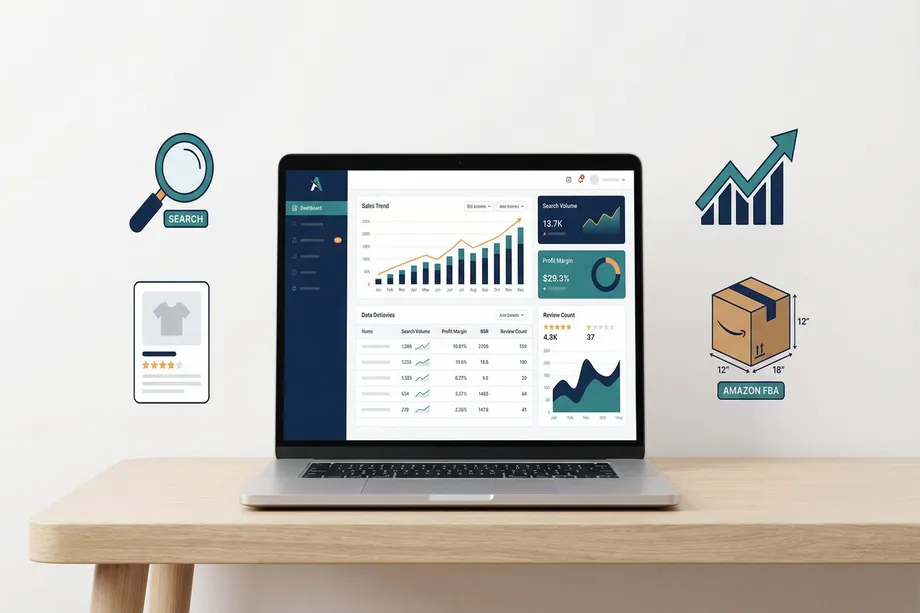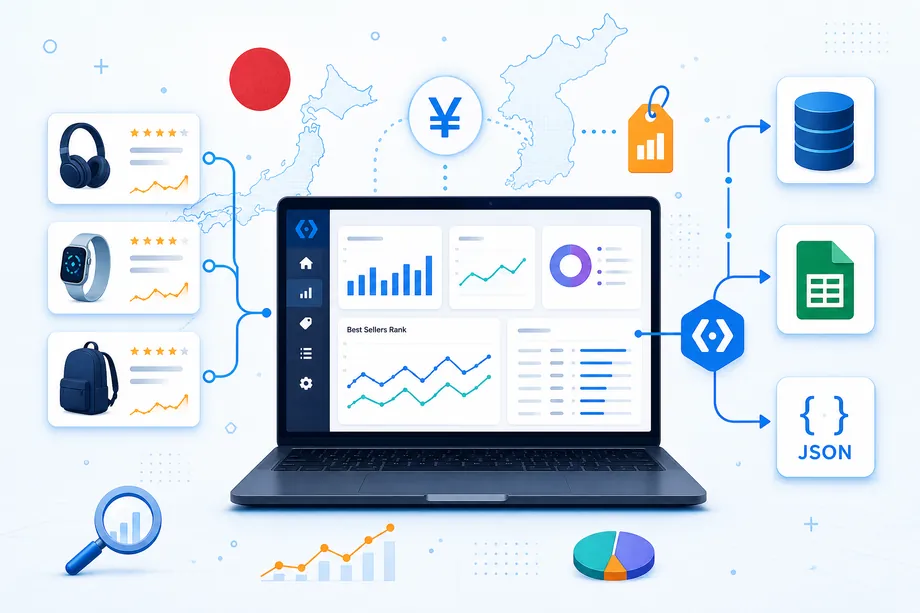
The dropshipping dream is alive and well: a thriving e-commerce business with no inventory, low overhead, and the freedom to work from anywhere. But there's a catch. The success of your entire operation hinges on one critical factor: choosing the right products to sell. Get it right, and you have a scalable, profitable business. Get it wrong, and you're left with a silent online store and wasted marketing spend.
So, how do the top 1% of dropshippers consistently find "winning" products? They don't rely on luck, intuition, or endless scrolling through social media feeds. They use data intelligence a systematic, data-driven approach to product research that replaces guesswork with certainty. This guide will show you how to leverage the world's largest product database, Amazon, to find your next bestseller.
The Old Way vs. The New Way: From Guesswork to Data-Driven Decisions
For years, dropshipping product research has been a manual, time-consuming, and often frustrating process. It involved hours of sifting through AliExpress, spying on competitors, and making educated guesses based on incomplete information. This traditional method is not only inefficient but also incredibly risky.
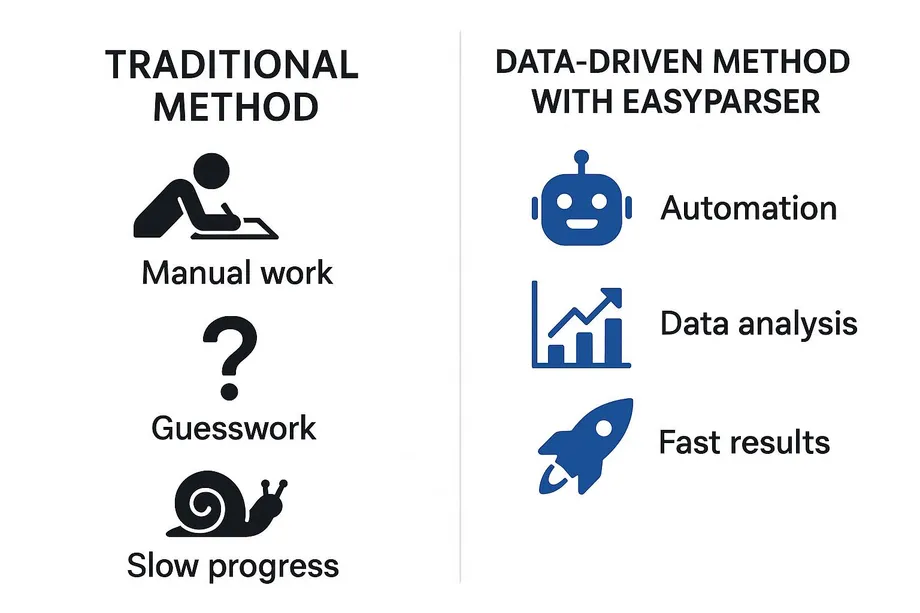
The new way is about leveraging automation and data to make informed decisions. By tapping into Amazon's real-time data, you can analyze market trends, validate demand, and assess competition before you ever invest a dollar in a product. This is the power of data intelligence, and it's what separates amateur dropshippers from professional e-commerce entrepreneurs.
The Anatomy of a Winning Product: Key Metrics to Track
A "winning" product isn't just a cool gadget or a trendy item. It's a product that meets a specific set of data-backed criteria. When you're analyzing potential products on Amazon, these are the core metrics you need to focus on:
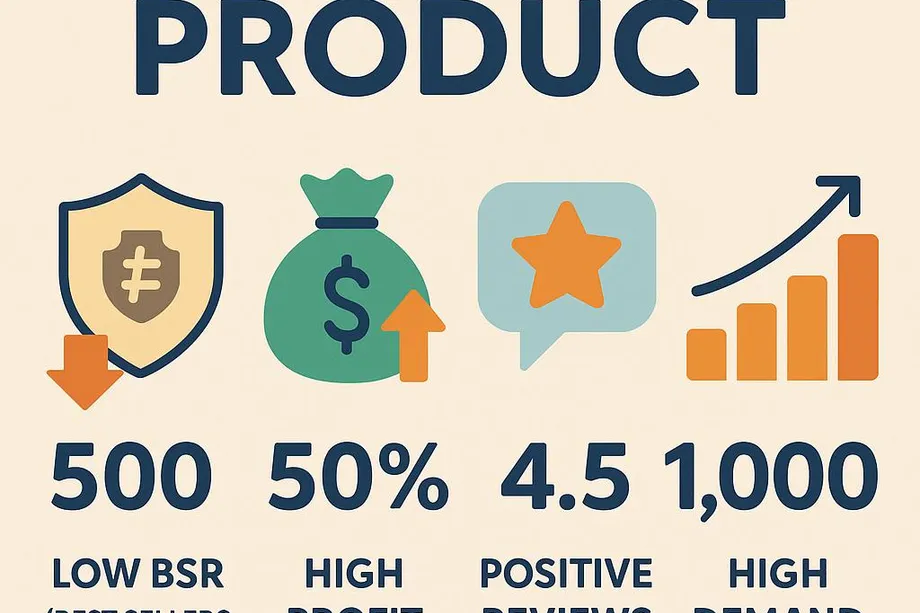
1. Best Sellers Rank (BSR)
The BSR is a direct indicator of a product's sales velocity within its category. A lower BSR means more sales. For dropshipping, you should look for products with a BSR of 20,000 or lower in their main category, as this suggests consistent demand.
2. Profit Margin
Your profit margin is the lifeblood of your business. A winning product should have a potential profit margin of at least 20-30% after accounting for the product cost, shipping fees, and marketing expenses. This gives you enough room to run ads, handle returns, and still make a healthy profit.
3. Customer Reviews and Rating
Reviews are a goldmine of information. Look for products with a 4.0-star rating or higher and a significant number of reviews (at least 50-100). This indicates a quality product with a proven track record of customer satisfaction. Reading through negative reviews can also reveal potential flaws or opportunities for improvement.
4. Price Point
The ideal price point for dropshipping products is typically between $15 and $50. This range is low enough to encourage impulse buys but high enough to provide a decent profit margin. Products in this range also tend to have lower customer service demands and return rates.
How to Automate Your Product Research with Easyparser
Manually checking these metrics for hundreds of products is impossible. This is where an API like Easyparser becomes your secret weapon. Instead of spending weeks on manual research, you can programmatically pull this data for thousands of products in minutes. Here's a simplified workflow:
- Identify a Niche: Start with a broad category you're interested in (e.g., "kitchen gadgets," "pet supplies").
- Gather a List of Products: Use the Easyparser
SEARCHoperation to get a list of top-selling products in that niche based on keywords. - Extract Detailed Data: For each product in your list, use the
DETAILoperation to pull key metrics like BSR, price, rating, and review count. - Filter and Analyze: Filter your list based on the winning product criteria. For example, keep only products with a BSR below 20,000, a rating above 4.0, and a price between $15 and $50.
- Assess the Competition: Use the
OFFERoperation to see how many other sellers are on the listing and what their prices are.
Here's a simple Python script to illustrate how you can use Easyparser to search for products and get their details:
import requests
import json
api_key = 'YOUR_API_KEY'
search_keyword = 'kitchen gadgets'
# Step 1: Search for products in the niche
search_params = {
'api_key': api_key,
'platform': 'AMZ',
'operation': 'SEARCH',
'keyword': search_keyword,
'domain': ".com"
}
search_result = requests.get('https://realtime.easyparser.com/v1/request', search_params).json()
# Step 2: Extract details for the top products
for product in search_result.get("result", {}).get("search", [])[:5]:
asin = product.get("asin")
detail_params = {
'api_key': api_key,
'platform': 'AMZ',
'operation': 'DETAIL',
'asin': asin,
'domain': ".com"
}
detail_result = requests.get('https://realtime.easyparser.com/v1/request', detail_params).json()
print(json.dumps(detail_result, indent=2))
Conclusion: Build Your Business on a Foundation of Data
The dropshipping landscape is more competitive than ever, and success is no longer about finding a single "magic" product. It's about building a repeatable, data-driven system for identifying, validating, and launching profitable products. By leveraging Amazon's vast repository of data through an API like Easyparser, you can move beyond guesswork and build a resilient, scalable e-commerce business.
Stop chasing trends and start analyzing them. The data is out there, waiting to be unlocked. With the right tools and a strategic approach, you can turn that data into your most valuable asset and pave your way to dropshipping success.
Advanced Product Validation: Beyond BSR and Reviews
BSR and review counts are the starting filters, not the finish line. Once a product passes those initial thresholds, a second layer of validation using additional data points from the Easyparser API separates promising candidates from risky ones. The four additional signals that matter most are seller competition, Prime eligibility, product dimensions, and review velocity.
Seller Competition: The OFFER Operation
A low seller count is one of the strongest indicators of a defensible dropshipping opportunity. Use the Easyparser OFFER operation to fetch the full seller list for any ASIN. Fewer than 5 sellers on a well-ranked product suggests limited competition. More than 20 sellers - especially with many FBA sellers at similar price points - signals a commoditized market where margins will be squeezed.
Prime Eligibility and Fulfillment Type
Products fulfilled via Amazon FBA (Fulfilled by Amazon) display the Prime badge and typically win the Buy Box over FBM (Fulfilled by Merchant) sellers at the same price. In the DETAIL response, check the fulfillment field within the buybox_winner object. If the dominant seller uses FBA, you'll need FBA as well to compete effectively - factoring FBA fulfillment costs into your margin calculation from day one.
Product Dimensions and Shipping Costs
Heavy or oversized items carry significantly higher FBA fees and shipping costs that can eliminate a product's margin entirely. The DETAIL response includes product dimensions and weight in the product_details field. Before committing to a product, calculate the actual FBA fee using Amazon's fee calculator to confirm that your projected margin survives the full cost of fulfillment.
Review Velocity: Is the Market Growing?
A product with 4.5 stars and 1,000 reviews that gained those reviews over 10 years is very different from one that gained the same reviews in 12 months. High review velocity indicates an actively growing market with strong consumer demand. While Easyparser doesn't directly provide review velocity, you can track review counts over time using the DETAIL operation and calculate the rate of growth - another data point for your validation model.
Niche Research Strategy: Finding the Sweet Spot
The most profitable dropshipping niches share one characteristic: high consumer demand with limited, unsophisticated competition. Finding these sweet spots requires combining search result data with BSR analysis across multiple keyword variations.
The research workflow using Easyparser looks like this:
- Broad keyword SEARCH - query a category term (e.g., 'kitchen organizer') and collect the top 20 ASINs from the results.
- Narrow keyword variations - repeat with more specific terms (e.g., 'bamboo kitchen drawer organizer', 'fridge organizer bins') to find sub-niches with less competition.
- BSR and seller analysis - for each candidate ASIN, fetch DETAIL data for BSR and OFFER data for seller count. Products with BSR under 20,000 AND fewer than 10 sellers are your sweet spot targets.
- Price and margin validation - confirm the price range supports your target margin after all costs.
The goal is to find keywords where Amazon's search results are populated primarily by smaller private-label brands or FBM sellers - not by established brands with thousands of reviews and perfect product-market fit. These gaps represent the entry points for new dropshipping products with genuine room to grow.
Building a Product Scoring System
Once you're collecting data with Easyparser, the next step is building an automated scoring algorithm that ranks candidates objectively. The following Python script assigns a score from 0–100 based on the four core metrics: BSR, price range, rating, review count, and seller competition.
import requests
def score_product(asin, api_key):
# Fetch product details
params = {'api_key': api_key, 'platform': 'AMZ',
'operation': 'DETAIL', 'asin': asin, 'domain': '.com'}
detail = requests.get('https://realtime.easyparser.com/v1/request', params).json().get('result', {}).get('detail', {})
# Fetch seller competition
params['operation'] = 'OFFER'
offers = requests.get('https://realtime.easyparser.com/v1/request', params).json()
seller_count = len(offers.get('result', {}).get('offers', []))
bsr = (detail.get('bestseller_rank', [{}]) or [{}])[0].get('rank', 999999)
price = detail.get('price', {}).get('value', 0)
rating = detail.get('rating', 0)
reviews = detail.get('review_count', 0)
score = 0
# BSR score (0-30 pts)
score += 30 if bsr < 1000 else 25 if bsr < 5000 else 20 if bsr < 20000 else 10 if bsr < 100000 else 0
# Price range score (0-20 pts)
score += 20 if 15 <= price <= 50 else 10 if 10 <= price <= 100 else 0
# Rating score (0-20 pts)
score += 20 if rating >= 4.5 else 15 if rating >= 4.0 else 5 if rating >= 3.5 else 0
# Review count score (0-15 pts)
score += 15 if reviews >= 500 else 10 if reviews >= 100 else 5 if reviews >= 50 else 0
# Seller competition score (0-15 pts)
score += 15 if seller_count <= 3 else 10 if seller_count <= 10 else 5 if seller_count <= 20 else 0
return {'asin': asin, 'score': score, 'bsr': bsr,
'price': price, 'rating': rating, 'reviews': reviews, 'sellers': seller_count}
# Score a candidate product
result = score_product('B0F25371FH', 'YOUR_API_KEY')
print('Score: ' + str(result['score']) + '/100 | BSR: ' + str(result['bsr']) + ' | Products scoring 70+ are strong candidates worth sourcing research. Scores between 50–69 warrant deeper investigation. Below 50, the data suggests at least one fundamental problem that would make the product difficult to sell profitably. Run this scoring function over an entire SEARCH result set and sort by score to automatically surface the best opportunities in any niche.
Avoiding Dropshipping Pitfalls: What the Data Reveals
Beyond the positive metrics that signal a winning product, experienced dropshippers also use data to identify red flags that can turn a seemingly attractive opportunity into a costly mistake. Here are four critical pitfalls the Easyparser API can help you detect before you commit to a product.
Restricted Brands and Gated Categories
Amazon restricts certain well-known brands (Nike, Apple, Lego) and entire categories (Jewelry, Fine Art, Grocery) to approved sellers only. Attempting to list a restricted brand will result in your listing being suppressed or your account being suspended. Before investing in product research, cross-reference candidate ASINs against Amazon's restricted brand list and check whether the category is gated for your account. The brand name appears in the DETAIL response's brand field - you can automate this check against a known restricted brands list.
Hazardous Materials (Hazmat)
Products containing lithium batteries, flammable materials, or certain chemicals are classified as hazardous and face strict FBA storage limitations, higher fulfillment fees, and shipping restrictions. The product title, bullet points, and description in the DETAIL response often contain clues - keywords like 'lithium battery,' 'flammable,' or 'pressurized' are warning signals. Shipping hazmat items without proper classification leads to FBA account violations and inventory removal at your expense.
Seasonal Risk and Demand Volatility
A product with an excellent BSR in November may drop to BSR 200,000 in February if it's holiday-specific. BSR data from the Easyparser DETAIL operation represents a point-in-time snapshot - for seasonal products, a single data point is misleading. Build historical BSR tracking into your research process and look for products with consistently strong BSR year-round, not just during peak seasons.
Price-to-Weight Ratio for Thin Margins
Heavy products with low prices are a classic margin trap. A $20 kitchen item weighing 5 lbs will incur FBA fees of $6–8, leaving a pre-ad-spend margin under 30% before accounting for COGS. Always calculate the full FBA fee - which depends on dimensions and weight available in the DETAIL response's product specifications - before adding a product to your shortlist. The ideal dropshipping product is lightweight, compact, priced between $25–$50, and durable enough to have low return rates.
Start scaling your e-commerce business today
Start Your Free Trial 100 free credits, no credit card required.
Frequently Asked Questions (FAQ)
Find winning dropshipping products by analyzing Amazon data for four key criteria: BSR under 20,000 in the main category (consistent sales velocity), rating of 4.0+ stars with 50+ reviews (validated quality), price between $15-$50 (impulse-buy range with healthy margins), and low seller competition. Use the Easyparser SEARCH operation to discover products by keyword, DETAIL to extract BSR and reviews, and OFFER to assess the seller landscape. Build a scoring algorithm to rank candidates automatically.A Best Sellers Rank (BSR) under 20,000 in a product's main category indicates consistent demand and is a solid benchmark for dropshipping viability. BSR under 5,000 signals very high velocity but may attract intense competition. BSR between 20,000 and 100,000 can still be profitable in lower-competition niches. Always validate BSR alongside review count, price point, and number of sellers - a strong BSR alone does not guarantee a profitable dropshipping opportunity.Use the Easyparser API to automate your entire research pipeline: the SEARCH operation discovers top products in your target niche by keyword, the DETAIL operation extracts BSR, price, rating, review count, and product dimensions, and the OFFER operation counts sellers and assesses Buy Box competition. Filter results against your criteria, score products programmatically, and store candidates in a database for regular monitoring. This replaces hours of manual research with a repeatable, data-driven process.The optimal price range for Amazon dropshipping is $15-$50. Products in this range encourage impulse purchases without requiring extensive pre-purchase research, provide sufficient margin (20-30%) after sourcing, shipping, and advertising costs, and typically generate lower return rates and customer service demands compared to higher-priced items. Products under $15 are difficult to make profitable after all fees. Products over $100 require more trust-building and face higher return rates.Yes. With the Easyparser API, you can fully automate your dropshipping research pipeline: use SEARCH to scan niches, DETAIL to pull BSR, price, and reviews, and OFFER to evaluate competition. Schedule automated research runs daily or weekly, store results in a database, and apply a scoring algorithm to surface the best candidates. The Bulk API makes it cost-effective to analyze thousands of products per run at $49/month for 100,000 requests.Related Articles
Tags
dropshipping winning productsamazon product researchdata intelligenceeasyparser dropshippingfind profitable productsamazon data apidropshipping scraperamazon product research scraperwinning products scraping