In the highly competitive world of Amazon e-commerce, timing is everything. A stockout doesn't just mean lost immediate sales; it means a drop in your Best Sellers Rank (BSR), a loss of keyword indexing, and giving your competitors a free pass to capture your market share. This is where amazon inventory tracking api and real-time stock availability monitoring become critical components of a successful seller strategy in 2026.
Traditional inventory management relies on periodic updates checking stock levels once a day or relying on Amazon's delayed seller reports. But in today's fast-paced environment, periodic checks are no longer sufficient. You need real-time visibility into your stock status, automated out-of-stock alerts, and the ability to track competitor availability dynamically. In this comprehensive guide, we will explore how to build a robust Amazon inventory monitoring system using the Easyparser API.
The True Cost of a Stockout on Amazon
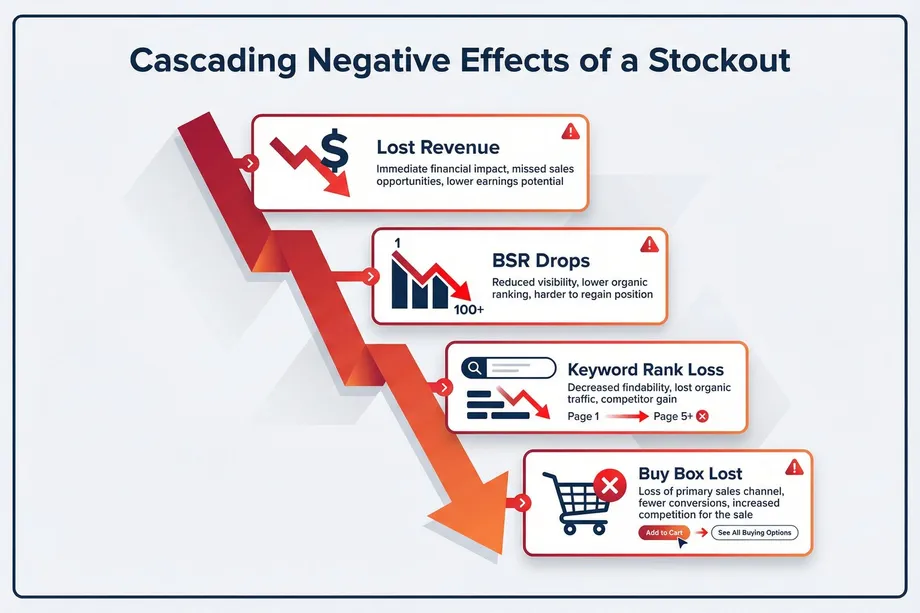
Before diving into the technical implementation, it's crucial to understand why real-time inventory tracking is so vital. When an ASIN goes out of stock on Amazon, several negative consequences trigger almost immediately:
- Lost Revenue: The most obvious impact is the immediate loss of sales during the stockout period.
- BSR Degradation: Amazon's A9 algorithm heavily weights sales velocity. A stockout halts sales, causing your BSR to plummet rapidly.
- Keyword Ranking Loss: As your BSR drops, your organic ranking for critical search terms also declines. Regaining these positions after restocking often requires significant PPC expenditure.
- Buy Box Loss: If you are a reseller, running out of stock means instantly losing the Buy Box to a competitor.
Implementing an amazon inventory tracking api allows you to shift from reactive damage control to proactive inventory optimization.
Extracting Stock Status Details with Easyparser
To monitor inventory effectively, you need accurate, real-time data directly from the Amazon product page. Easyparser's DETAIL operation provides exactly this, extracting granular stock status information that goes beyond a simple "in stock" or "out of stock" binary.
When you query an ASIN using Easyparser, the API returns detailed availability data, including:
- In Stock: The item is currently available for immediate purchase and shipping.
- Out of Stock: The item is currently unavailable, with no immediate restock date provided.
- Limited Stock: Amazon often displays messages like "Only 3 left in stock - order soon." Easyparser extracts this specific quantity, which is invaluable for tracking competitor inventory levels or anticipating imminent stockouts.
- Backorder/Future Availability: If an item is out of stock but a restock date is known (e.g., "In stock on April 15, 2026"), the API captures this future availability date.
This level of detail is essential for sophisticated inventory monitoring automation.
Setting Up Real-Time Monitoring: Polling and Change Detection
To create a real-time monitoring system, you need to establish a polling mechanism that periodically checks the stock status of your target ASINs. The frequency of these checks (the polling interval) depends on the volatility of the product and your specific needs. For highly competitive or fast-moving items, you might check every hour; for stable products, a daily check might suffice.
The core logic of a monitoring script involves comparing the newly fetched stock status with the previously recorded status. If a change is detected (e.g., transitioning from "In Stock" to "Limited Stock", or a competitor's stock dropping to zero), the system triggers an alert.
Here is a basic Python example demonstrating how to fetch stock details using the Easyparser API:
import requests
API_KEY = "YOUR_API_KEY"# Get your key from app.easyparser.com
ASIN = "B098FKXT8L"
params = {
"api_key": API_KEY,
"platform": "AMZ",
"operation": "DETAIL",
"asin": ASIN,
"domain": ".com"
}
response = requests.get("https://realtime.easyparser.com/v1/request", params=params)
data = response.json()
availability = data.get("product", {}).get("availability", "Unknown")
print(f"Current Availability: {availability}")
For large-scale tracking across thousands of ASINs, you should utilize Easyparser's Bulk API with webhook integration. This allows you to submit a large batch of ASINs and receive a payload asynchronously when the data is ready, significantly reducing the overhead on your local infrastructure.
Automated Out-of-Stock Alerts and Notifications
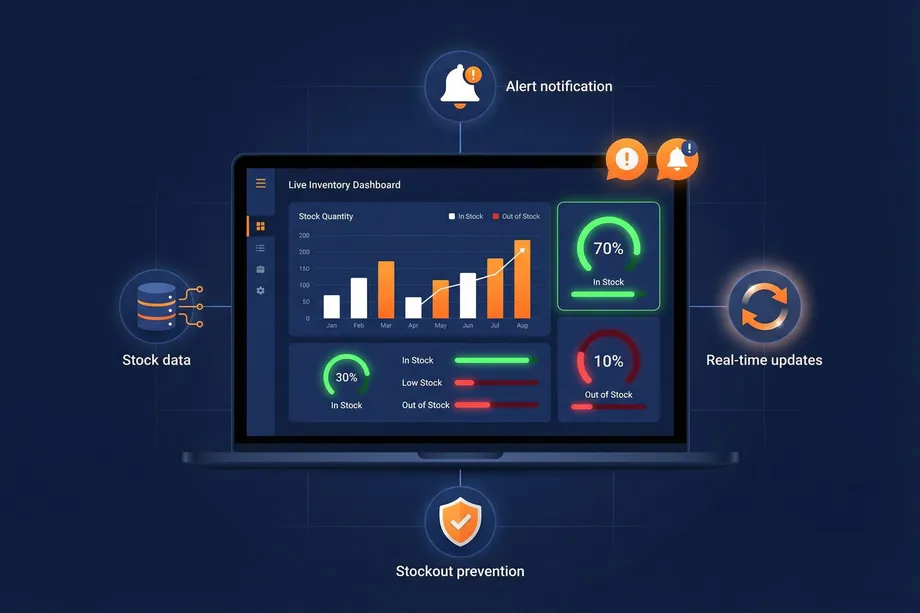
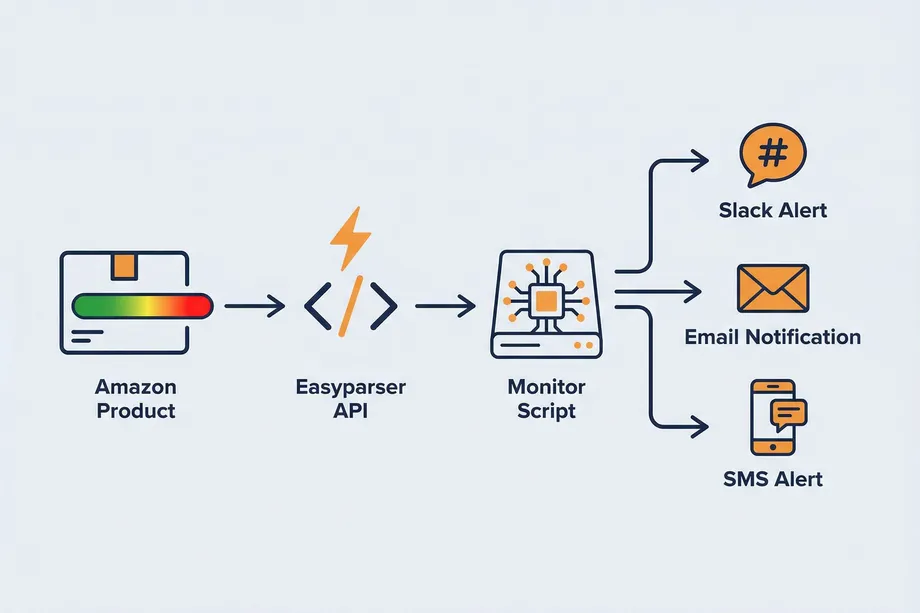
Detecting a stock change is only half the battle; the other half is ensuring the right people are notified immediately. A robust inventory monitoring automation system should integrate with your team's communication tools.
When your script detects a critical stock event such as your inventory dropping below a safety threshold or a competitor running out of stock it should automatically dispatch an alert. Common integration points include:
- Email Notifications: For daily summaries or non-critical alerts.
- Slack/Discord Webhooks: For instant team notification in dedicated channels (e.g., #inventory-alerts).
- SMS Alerts: For critical, after-hours stockout emergencies.
By automating these alerts, you eliminate the need for manual dashboard checking and ensure that your supply chain team can react instantly to inventory issues.
Competitor Availability Tracking: Capitalizing on Stockouts
While monitoring your own inventory is defensive, tracking competitor availability is an offensive strategy. A competitor's stockout is your opportunity to capture their market share.
By using an amazon inventory tracking api to monitor your main rivals, you can detect exactly when they run out of stock. When this happens, you can immediately trigger automated actions:
- Increase PPC Bids: With a major competitor out of the picture, aggressively increase your advertising bids to capture the traffic they are missing.
- Adjust Pricing: If the market supply is suddenly constrained due to a competitor's stockout, you may have the opportunity to slightly increase your price and improve margins.
- Analyze Restock Times: Tracking how long it takes a competitor to restock provides valuable intelligence about their supply chain efficiency and lead times.
For more advanced competitor tracking, consider integrating this data with insights from our Amazon Buy Box Comprehensive Guide to understand exactly how stock availability impacts Buy Box win rates.
Reorder Point Optimization and Inventory Planning
Real-time monitoring is not just about alerts; it's about building a historical dataset for better inventory planning. By continuously logging stock levels over time, you can analyze stock level trends and integrate this data into your demand forecasting models.
Effective reorder point optimization requires understanding your sales velocity (which you can track using the Amazon BSR to Sales Estimation techniques) and your supplier lead times. By combining real-time stock data with historical sales trends, you can calculate precise safety stock levels and automate reorder recommendations, ensuring you reorder just in time to prevent stockouts without tying up excessive capital in overstock.
Building a Complete Python Inventory Monitor
To bring all these concepts together, a production-ready inventory monitor typically involves a Python application running on a scheduled job (e.g., a cron job on a Linux server or an AWS Lambda function). The application performs the following steps:
- Reads the list of target ASINs from a database.
- Calls the Easyparser API to fetch current stock details.
- Compares the current status with the last known status in the database.
- Logs the new status for historical trend analysis.
- If a threshold is breached or a status changes, triggers the appropriate alert system (Slack, Email).
This automated workflow transforms inventory management from a manual chore into a data-driven, proactive system. To see the full capabilities of Easyparser for this and other use cases, check out our complete Amazon Scraping API operations page.
Conclusion
In 2026, relying on delayed seller reports or manual checks is a recipe for lost sales and degraded rankings. Implementing an amazon inventory tracking api provides the real-time visibility necessary to optimize reorder points, prevent catastrophic stockouts, and capitalize on competitor supply chain failures. By leveraging Easyparser's robust data extraction capabilities, sellers and developers can build automated monitoring systems that protect revenue and drive strategic growth.
Start building your Amazon data pipeline today
Start Your Free Trial100 free credits, no credit card required.