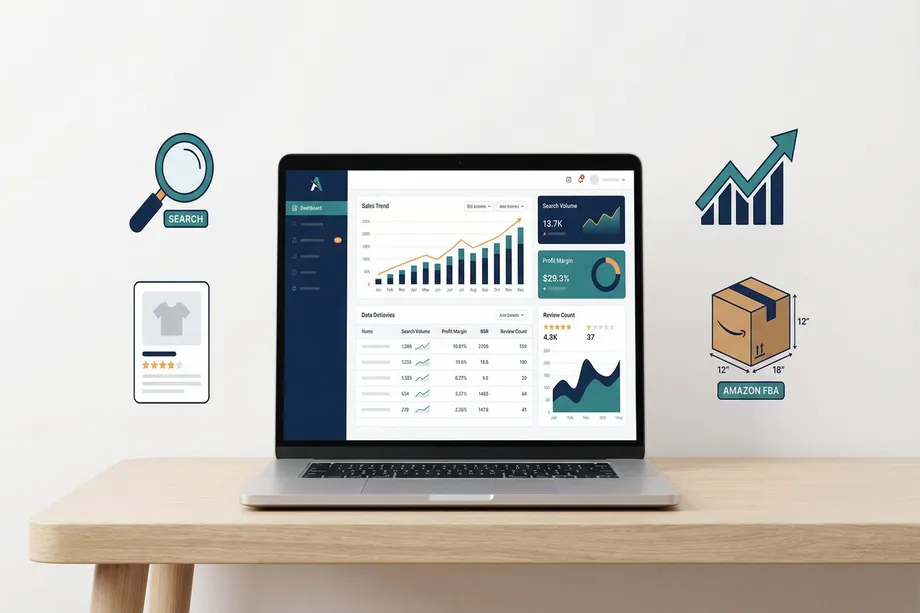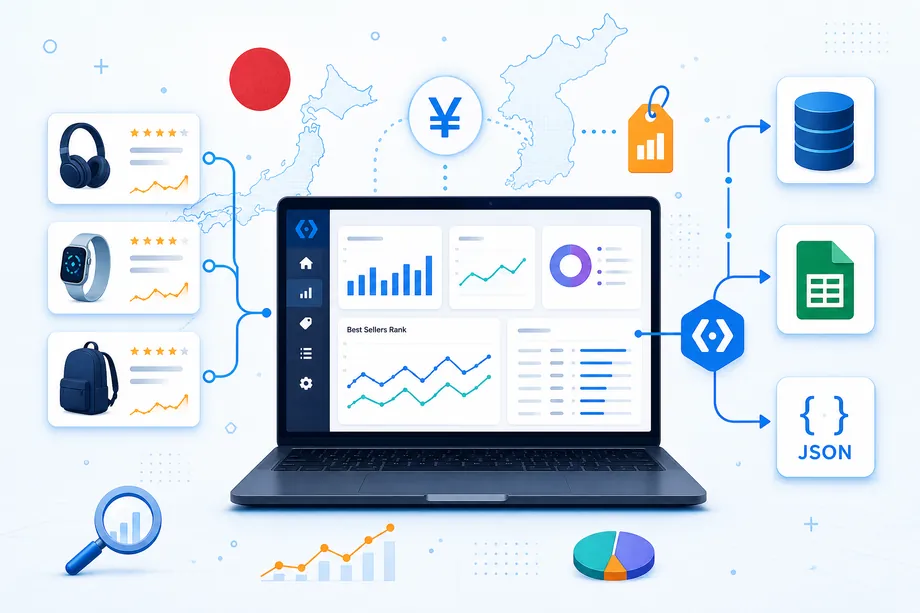
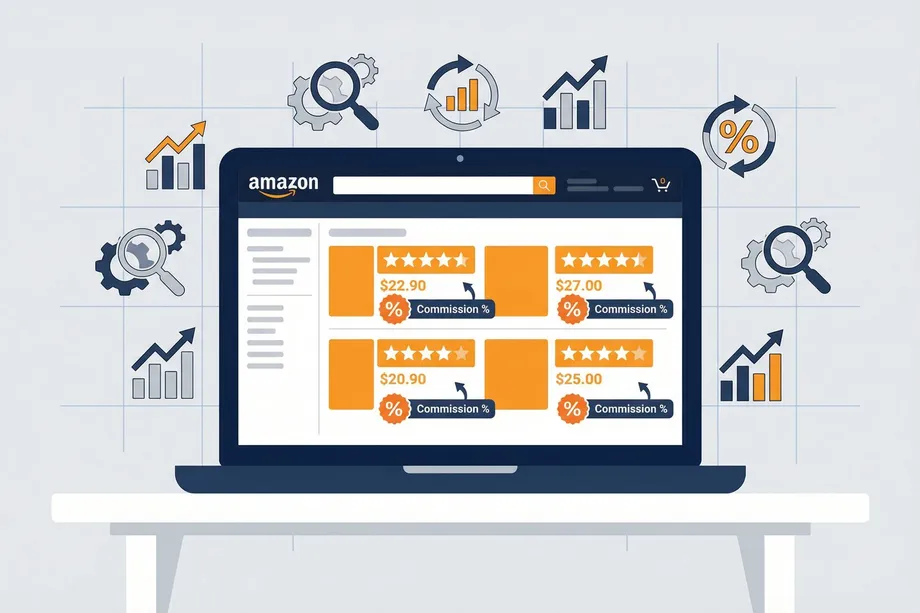
In the highly competitive world of affiliate marketing, success often hinges on the quality of your product recommendations. For Amazon Associates, manually sifting through thousands of products to find the perfect mix of high conversion rates, good commissions, and low competition is a monumental task. The sheer volume of data on Amazon makes traditional, manual amazon affiliate product research inefficient and prone to oversight.
As we move through 2026, the most successful affiliate marketers are shifting away from manual searches and embracing automated data extraction. By programmatically gathering product details, pricing, ratings, and historical trends, affiliates can build comprehensive comparison tables, identify content gaps, and uncover lucrative niches that others miss. This guide explores how to leverage automated data extraction to transform your Amazon affiliate strategy from guesswork into a precise, data-driven science.
Why Affiliate Marketers Need Amazon Data Extraction
The core challenge of Amazon affiliate marketing is the dynamic nature of the marketplace. Prices fluctuate daily, new competitors enter niches constantly, and product availability can change in an instant. Relying on static spreadsheets or periodic manual checks means your affiliate links might direct users to out-of-stock items or products that are no longer competitively priced, directly impacting your conversion rates and earnings.
Automated data extraction solves this problem by providing a continuous, reliable stream of product information. Instead of spending hours clicking through category pages, you can set up a system that automatically retrieves the data you need. This approach not only saves time but also allows you to analyze products at a scale that is impossible to achieve manually. With the right tools, you can monitor entire categories, track competitor offerings, and identify emerging trends before they become mainstream.
For affiliate marketers who promote products across multiple categories, the ability to pull structured data programmatically is a significant competitive advantage. Rather than relying on Amazon's native search interface, which is designed for shoppers rather than researchers, you can build custom queries that surface exactly the products your audience is most likely to buy. This is the foundation of a truly scalable amazon affiliate product research workflow.
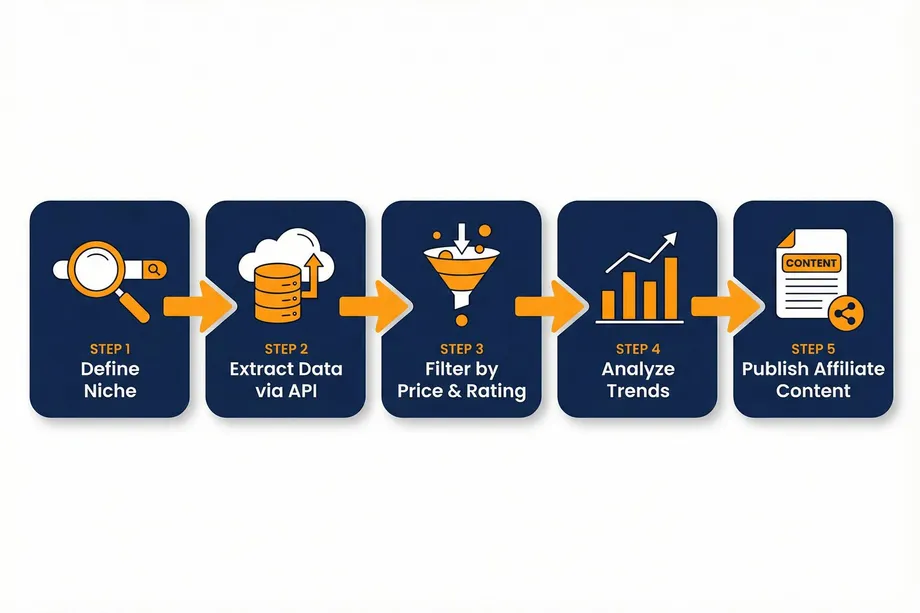
What Data Can You Extract for Affiliate Research?
To build effective affiliate content, you need more than just a product title and an affiliate link. Comprehensive amazon affiliate product research requires a deep dive into several key data points that influence consumer purchasing decisions.
First, you need accurate pricing data. This includes not just the current price, but historical pricing trends to identify the best times to promote specific products. Second, customer reviews and ratings are crucial. Extracting the number of reviews, average star ratings, and even specific customer sentiments can help you highlight the pros and cons of a product authentically. Third, product specifications and features allow you to create detailed comparison charts that add genuine value for your readers.
Furthermore, data points like Best Sellers Rank (BSR) and "Bought in past month" metrics provide insights into a product's popularity and sales velocity. By extracting this data programmatically, you can prioritize products that are not only relevant to your audience but also have a proven track record of converting. Additional data points worth collecting include the number of active sellers, Buy Box ownership, and variation details such as color and size availability. Each of these fields contributes to a more complete picture of a product's commercial viability as an affiliate recommendation.
| Data Point | Affiliate Use Case | API Operation |
|---|---|---|
| Price & Price History | Identify best-value products, time promotions | DETAIL / OFFER |
| Star Rating & Review Count | Filter high-converting products | DETAIL |
| Best Sellers Rank (BSR) | Gauge demand and sales velocity | BSR |
| Bought in Past Month | Validate real-world popularity | DETAIL |
| Seller Count & Buy Box | Assess competition level | OFFER |
| Product Variations | Cover all variants in comparison content | DETAIL |
How to Find High-Commission Products with Data APIs
While the Amazon Associates program has fixed commission rates for different product categories, finding the most profitable products within those categories requires strategic analysis. High-priced items might offer larger individual commissions, but they often have lower conversion rates. Conversely, cheaper items might convert easily but require massive traffic to generate significant income.
Using a data API like Easyparser's Amazon Scraping API allows you to systematically search for the "sweet spot" - products with a balanced combination of price, positive reviews, and high sales velocity. You can automate queries to filter products based on specific criteria, such as items priced between $50 and $150 with a minimum rating of 4.5 stars and over 1,000 reviews. This targeted approach ensures that your affiliate efforts are focused on products that maximize your earning potential.
The SEARCH operation is particularly useful here. By querying a keyword and sorting results by relevance or sales rank, you can quickly identify which products dominate a given niche. Cross-referencing this with the DETAIL operation gives you the full picture: price, rating, review count, and availability. This two-step lookup is the backbone of any serious amazon affiliate product research pipeline.
Automating Price & Rating Comparisons at Scale
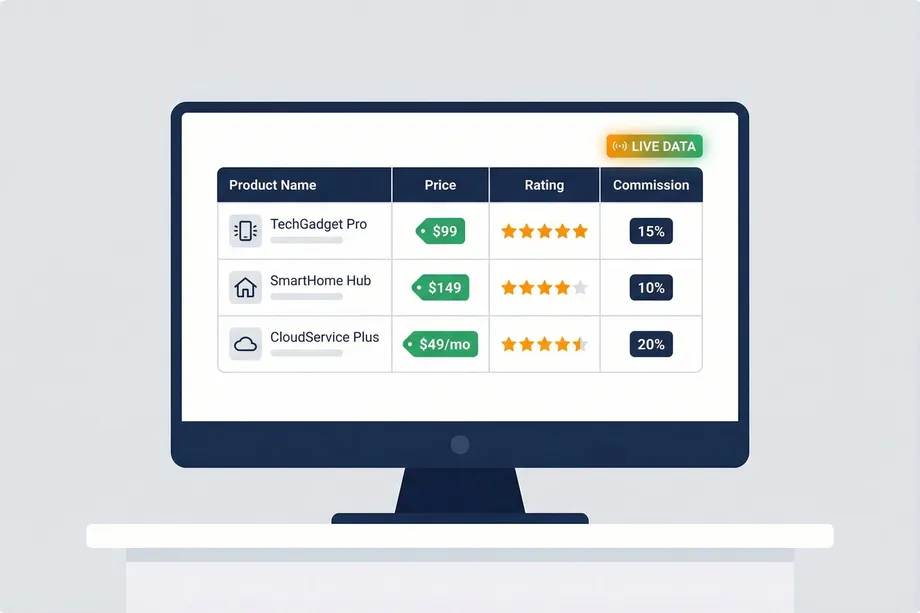
One of the most effective types of affiliate content is the comparison article (e.g., "Top 5 Wireless Earbuds under $100"). However, keeping these comparisons accurate as prices and ratings change is a constant battle. Automated data extraction turns this ongoing maintenance task into a set-and-forget process.
By integrating an API into your content management system, you can dynamically update pricing and rating information in real-time. When a user visits your comparison page, the latest data is pulled directly from Amazon, ensuring that your recommendations are always current. This not only improves the user experience but also builds trust with your audience, increasing the likelihood that they will click your affiliate links.
For sellers who also run affiliate programs alongside their own listings, this kind of automated monitoring provides a dual benefit: it keeps your affiliate content accurate while simultaneously alerting you to competitor price changes. The OFFER operation in Easyparser returns all active sellers and their prices for a given ASIN, making it straightforward to build a price-tracking system that feeds directly into your affiliate content workflow.
Niche Analysis: Using Extracted Data for Content Gap Research
Finding an underserved niche is often the key to rapid success in affiliate marketing. If you can identify a category with high demand but poor-quality affiliate content, you can quickly establish yourself as an authority. Data extraction is a powerful tool for uncovering these opportunities.
You can use automated extraction to analyze the top-ranking products in various subcategories. By looking at the number of reviews and the quality of existing product listings, you can gauge the level of competition. If you find a category with high-priced products that have relatively few reviews, it might indicate a niche where comprehensive, high-quality affiliate content could perform exceptionally well. This data-driven approach to niche selection minimizes risk and maximizes your chances of ranking well in search engines.
A practical technique is to extract BSR data for an entire subcategory and sort by rank. Products with a strong BSR but few existing affiliate reviews represent a clear content gap. You can then build a content calendar around these gaps, systematically publishing comparison articles and buying guides that fill the void. Easyparser Amazon API supports bulk requests, so you can pull data for hundreds of ASINs in a single call, making large-scale niche analysis both fast and cost-effective.
Competitor Affiliate Site Analysis with Data Extraction
Understanding what your competitors are doing is just as important as analyzing the products themselves. While you should not copy their content, analyzing the products they promote can provide valuable insights into their strategy and help you identify gaps in your own.
You can use data extraction tools to monitor the outbound affiliate links on competitor websites. By cross-referencing these links with Amazon product data, you can see exactly which products they are prioritizing, what price points they target, and how they structure their recommendations. This intelligence allows you to refine your own amazon affiliate product research strategy and potentially uncover lucrative products that you had overlooked.
Beyond product selection, competitor analysis can reveal content structure patterns. If the top-performing affiliate sites in your niche consistently include detailed specification tables, video reviews, or user sentiment summaries, that is a signal about what your audience values. Data extraction gives you the raw material to match or exceed those content standards at scale.
Building a Data-Driven Affiliate Content Calendar
A consistent publishing schedule is vital for growing an affiliate site, but deciding what to write about can be challenging. Data extraction can help you build a content calendar based on empirical evidence rather than intuition.
By tracking trends in product popularity, seasonal demand, and emerging categories, you can plan your content months in advance. For example, if your data shows a consistent spike in searches for specific outdoor gear in early spring, you can schedule your comparison articles and product reviews to coincide with that peak demand. This proactive approach ensures that your content is always relevant and timely, maximizing its potential to generate affiliate revenue.
The BSR operation is particularly useful for seasonal planning. By tracking rank changes over time for products in a given category, you can identify predictable demand cycles and plan your publishing schedule accordingly. Combine this with the SEARCH operation to monitor which keywords are driving traffic to top-ranking products, and you have a comprehensive, data-backed editorial strategy.
Python Workflow: Automate Your Affiliate Product Research
To truly harness the power of automated data extraction, you need a reliable and efficient way to gather the data. Easyparser provides a robust API designed specifically for Amazon data, making it the ideal tool for building your affiliate research pipeline. It handles the complexities of proxy management and anti-bot measures, allowing you to focus on analyzing the data rather than fighting infrastructure challenges.
Here is a practical Python example demonstrating how to use the Easyparser API to retrieve detailed product information for a list of ASINs. This script forms the foundation of an automated amazon affiliate product research system. For the full list of supported operations, visit the Easyparser Amazon Scraping API documentation page.
import requests
API_KEY = "YOUR_API_KEY" # Get your key from app.easyparser.com
TARGET_ASINS = ["B098FKXT8L", "B0CJB6V2L5", "B0CF3VGQFL"]
results = []
for asin in TARGET_ASINS:
params = {
"api_key": API_KEY,
"platform": "AMZ",
"operation": "DETAIL",
"asin": asin,
"domain": ".com"
}
response = requests.get("https://realtime.easyparser.com/v1/request", params=params)
data = response.json()
product = data.get("product", {})
results.append({
"asin": asin,
"title": product.get("title"),
"price": product.get("price"),
"rating": product.get("rating"),
"reviews": product.get("reviews_count")
})
for r in results:
print(f"{r['asin']}: {r['title']} | ${r['price']} | {r['rating']} stars | {r['reviews']} reviews")
Conclusion
In 2026, relying on manual methods for amazon affiliate product research is no longer a viable strategy for serious marketers. The sheer volume and volatility of Amazon data require an automated approach. By leveraging data extraction tools like Easyparser, you can uncover hidden niches, monitor competitor strategies, and build dynamic, high-converting content that stays accurate over time. Embracing automation not only saves countless hours but also provides the actionable insights needed to significantly increase your affiliate revenue. Whether you are just starting out or scaling an established affiliate site, the workflows described in this guide give you a practical, replicable foundation for data-driven growth.
Start scaling your e-commerce business today
Start Your Free Trial100 free credits, no credit card required.