For wholesale buyers and B2B distributors, the landscape of Amazon sourcing has fundamentally shifted. In 2026, finding a supplier is easy, but verifying their reliability is the true challenge. Relying solely on a polished website or a convincing sales pitch is a recipe for inventory delays, counterfeit claims, and lost capital. Amazon wholesale supplier vetting must now be treated as a rigorous, data-driven due diligence process.
This guide explores how buyers can leverage public Amazon data to evaluate potential wholesale partners. We will demonstrate how to combine legal identity verification, long-term feedback trends, and catalog analysis to build a robust supplier scorecard. By shifting from manual checks to automated data extraction using Easyparser, wholesale buyers can confidently vet suppliers at scale.
Why Data-Driven Supplier Vetting Matters
The traditional approach to vetting a wholesale supplier often involves reviewing their business license, checking their website, and perhaps asking for a few references. While these steps remain necessary, they are easily manipulated. A supplier might have a legitimate LLC but a terrible track record of fulfilling orders on time or handling returns.
A data-driven approach to amazon wholesale supplier vetting looks beyond the surface. It analyzes the supplier's actual operational footprint on the world's largest marketplace. By extracting and evaluating a supplier's Amazon performance data, buyers can uncover the truth about their logistics capabilities, product authenticity, and customer service standards. This method transforms subjective trust into objective metrics.
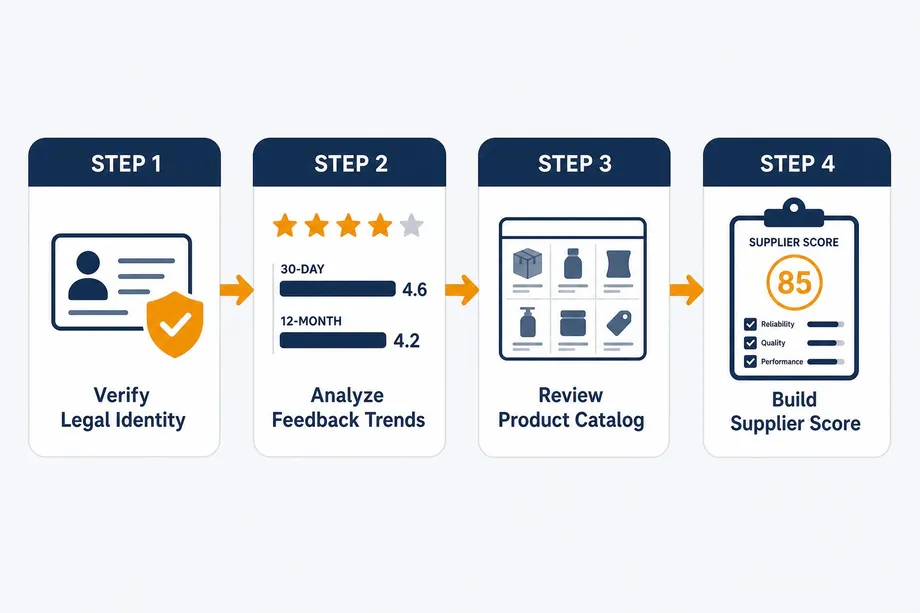
Step 1: Verify Legal Identity with SELLER_PROFILE
The foundation of any supplier relationship is confirming that the entity you are dealing with is who they claim to be. Scammers frequently set up shell companies or impersonate established brands to secure wholesale orders.
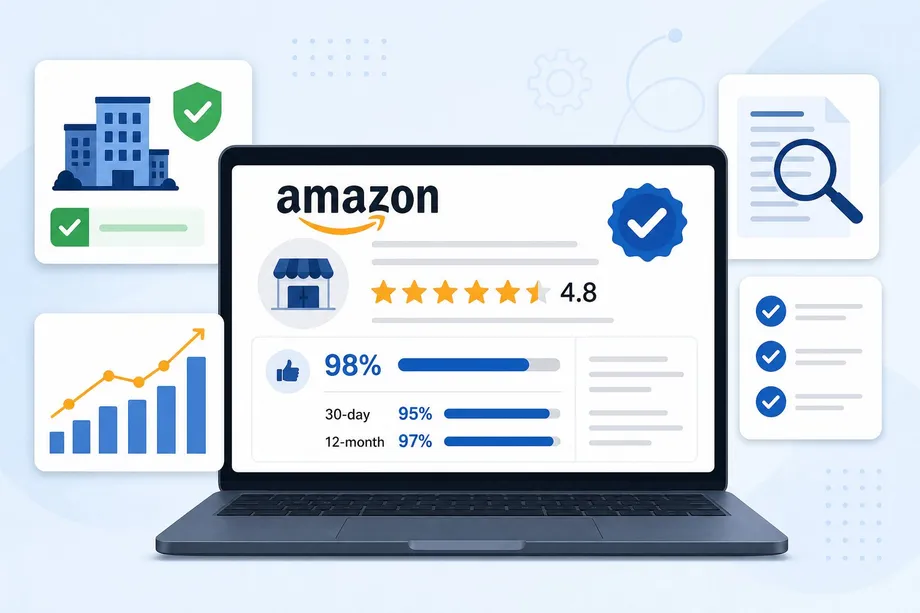
The first step in amazon wholesale supplier vetting is to extract the supplier's registered business information directly from Amazon. Amazon requires sellers to provide their legal business name and physical address, which is publicly accessible but often difficult to track manually across hundreds of potential partners.
Using the SELLER_PROFILE operation, buyers can programmatically retrieve this critical data. If the business name on their invoice does not match the legal entity registered on Amazon, or if their address points to a residential PO Box rather than a commercial warehouse, these are immediate red flags.
SELLER_PROFILE Implementation
To use this operation, you only need the seller_id (or storefront URL) and the marketplace domain (e.g., ".com").
import requests
params = {
"api_key": "YOUR_API_KEY",
"platform": "AMZ",
"operation": "SELLER_PROFILE",
"seller_id": "AXCB29L39I26U",
"domain": ".com"
}
response = requests.get("https://realtime.easyparser.com/v1/request", params=params)
Example Response (Excerpt)
The API returns structured JSON containing both the legal business details and a summary of feedback trends:
{
  "seller_id": "AXCB29L39I26U",
  "seller_name": "Focus Camera LLC",
  "seller_rating": 4.7,
  "business_name": "FOCUS CAMERA LLC",
  "business_address": "905 McDonald Avenue BROOKLYN NY 11218 US",
  "feedback_summary": [
    {
      "thirty_days": {
        "positive_percent": 96,
        "neutral_percent": 2,
        "negative_percent": 2,
        "count": 52
      },
      "twelve_months": {
        "positive_percent": 94,
        "neutral_percent": 2,
        "negative_percent": 4,
        "count": 1695
      }
    }
  ]
}
Step 2: Analyze Deep Feedback Logs with SELLER_FEEDBACK
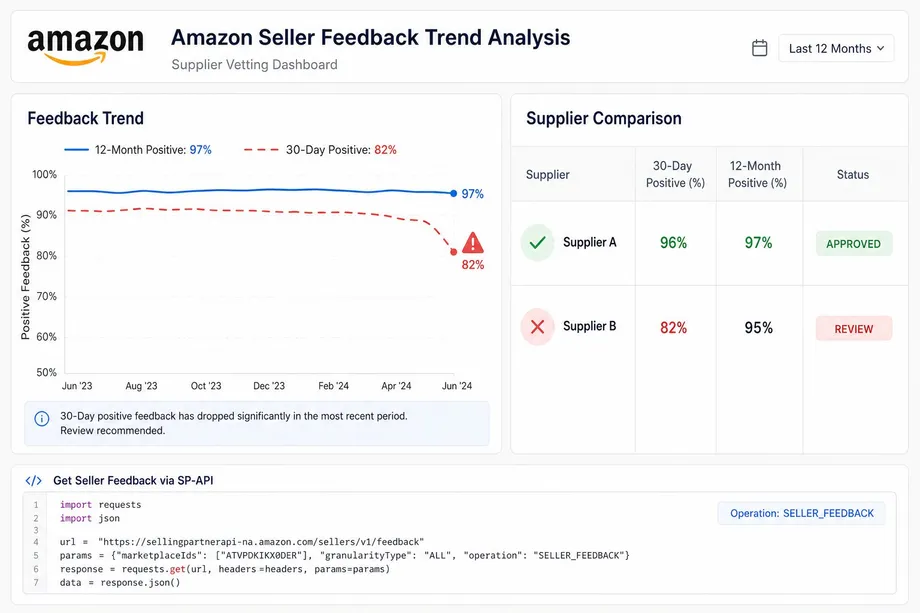
While the profile summary gives you a quick trend overview, sometimes you need to dig deeper into the actual customer complaints. A supplier might promise rapid fulfillment, but their raw Amazon seller feedback tells the real story.
A comprehensive amazon wholesale supplier vetting process requires analyzing the actual text of recent feedback. Are customers complaining about counterfeit items? Poor packaging? Missed delivery dates?
The SELLER_FEEDBACKoperation allows buyers to extract the granular, paginated feedback logs. You can filter this data using parameters like history_range (e.g., 1, 3, 12 months, or "all"), min_rating, and max_rating. Furthermore, it reveals suppressed (strikethrough) feedback, helping buyers differentiate between supplier errors and Amazon FBA logistical issues.
SELLER_FEEDBACK Implementation
This operation is highly customizable, allowing you to filter for specifically negative feedback over a set period:
params = {
"api_key": "YOUR_API_KEY",
"platform": "AMZ",
"operation": "SELLER_FEEDBACK",
"seller_id": "AXCB29L39I26U",
"domain": ".com",
"history_range": "12", # Look at last 12 months
"min_rating": 1,
"max_rating": 3# Only fetch neutral and negative feedback
}
Example Response (Excerpt)
The response provides the exact text of the feedback, the rating given, and whether Amazon crossed it out (strikethrough):
{
  "feedback": [
    {
      "body": "Item arrived in a damaged box and looked used.",
      "rating": "1.0",
      "rater": "By Amazon Customer on March 15, 2026.",
      "is_strikethrough": false
    },
    {
      "body": "Never received the package.",
      "rating": "1.0",
      "rater": "By Sarah on March 10, 2026.",
      "is_strikethrough": true,
      "strikethrough_reason": "Message from Amazon: This item was fulfilled by Amazon, and we take responsibility for this fulfillment experience."
    }
  ],
  "feedback_count": 2
}
Step 3: Review Product Catalog with SELLER_PRODUCTS
A supplier's catalog provides deep insights into their business model and market positioning. If a distributor claims to be an authorized wholesaler for premium electronics but their Amazon storefront is filled with low-tier generic accessories, their credibility is questionable.
By utilizing the SELLER_PRODUCTS operation, buyers can extract the complete inventory of a potential supplier. This allows for a thorough catalog audit:
- Brand Consistency: Does the supplier consistently stock the brands they claim to represent?
- Pricing Strategy: Are they adhering to Minimum Advertised Price (MAP) policies, or are they constantly undercutting the market?
- Stock Depth: Do they maintain consistent inventory levels across a wide range of ASINs, indicating a robust supply chain?
SELLER_PRODUCTS Implementation
You can fetch the seller's active catalog. Note that pagination parameters like min_page and max_page are available to scrape large catalogs.
params = {
"api_key": "YOUR_API_KEY",
"platform": "AMZ",
"operation": "SELLER_PRODUCTS",
"seller_id": "A1MCYUGJD2ILFU",
"domain": ".com",
"max_page": 1
}
Example Response (Excerpt)
The output provides a detailed array of every product listed by the seller, including pricing, Prime status, and current ratings:
{
  "seller_id": "A1MCYUGJD2ILFU",
  "asin": "B0FJRQC5LZ",
  "title": "OLANLY Memory Foam Bath Mat 30x20...",
  "brand": "OLANLY",
  "product_type": "RUG",
  "is_prime": true,
  "price": 7.59,
  "price_currency": "USD",
  "rating": 4.5,
  "ratings_total": 397
}
Red Flags: What Bad Seller Data Looks Like
When conducting amazon wholesale supplier vetting, certain data patterns should trigger immediate caution. Identifying these red flags early can save buyers from costly mistakes.
- Sudden Spikes in Negative Feedback: A rapid increase in complaints about "item not as described" or "counterfeit" strongly suggests the supplier has changed their sourcing to cheaper, unverified channels.
- High Volume of Strikethrough Reviews: While Amazon suppresses feedback related to FBA delivery issues, a massive volume of these might indicate the supplier is consistently sending poorly packaged or damaged goods to FBA warehouses.
- Inconsistent Legal Entities: Frequent changes to the registered business name or address on the seller profile often point to attempts to evade account suspensions or legal scrutiny.
Building a Supplier Scorecard with Amazon Data
To scale the vetting process, wholesale buyers should transition from manual checks to an automated supplier scorecard. This scorecard aggregates data from the Easyparser APIs to generate a composite risk score for every potential partner.
A basic scorecard might weight metrics as follows:
- Identity Match (Pass/Fail): Does the API-extracted legal name match the provided documentation?
- 12-Month Feedback Score (40%): Consistent long-term reliability.
- 30-Day Feedback Trend (30%): Recent operational health.
- Catalog Relevance (30%): Alignment of extracted ASINs with the buyer's target niche.
By automating this data extraction, a buyer can vet 50 suppliers in an afternoon, focusing their negotiation efforts only on the top-tier distributors.
Start scaling your e-commerce business today
Start Your Free Trial100 free credits, no credit card required.